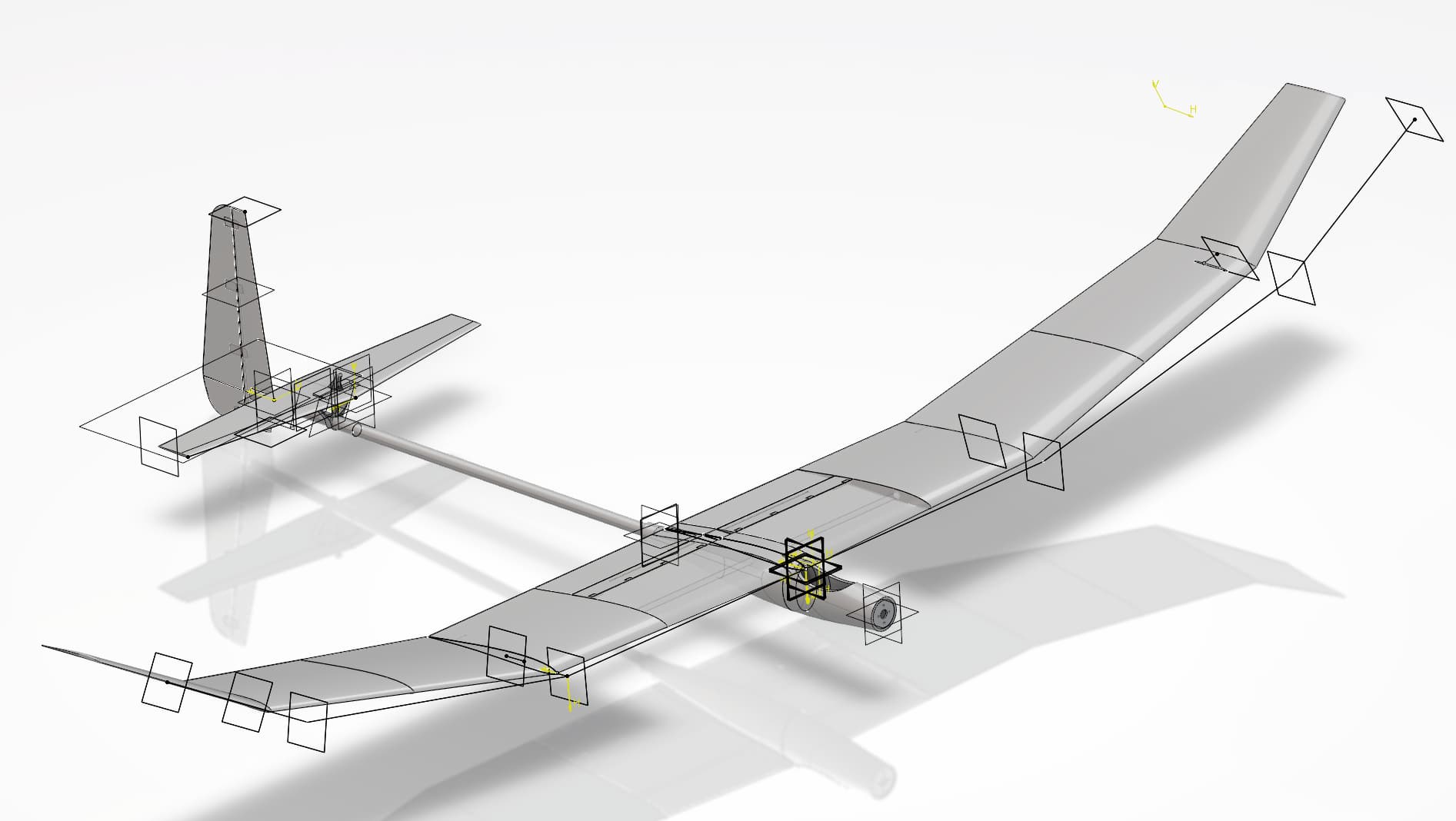
My turn to share my projects ! 
If you’re new to aeromodelling, think “small airplanes you design, build, and fly from the ground”  . My corner of it is RC gliders. They often have no motor; you launch them by hand, then they surf rising air from slopes and warm thermals like birds on an elevator
 . It looks simple, but making a light, stiff, precise airframe is the real challenge. Wood and foam can get you there, but it’s a marathon of cutting and sanding until your bench looks like it snowed indoors
  . Carbon-molded gliders fly brilliantly, yet the price climbs while your wallet… does not
  . I am French, how you say, ze goal is to fly more and sand less
  .
.
Here is my plan. I would print a two-meter span sailplane on the K2 Pro Combo, using recognized airfoils and lightweight foaming filaments: LW-PLA, LW-ASA, and HT-LW-PLA  . These materials expand as you tune temperature and flow, trading solid plastic for micro-bubbles
 . Think of it like a really good baguette: light inside, crisp outside, and it still holds its shape when you slice it. That means low mass with skins that feel surprisingly stiff, exactly what a glider loves .
The printer suits the job. I need to print wing modules with roughly 30 cm chord, and that fits the platform so the airfoil stays honest and the number of joints stays low  . A warm, stable chamber keeps foaming predictable, which helps with LW-ASA and especially HT-LW-PLA . The extrusion path handles abrasive formulations, and I will pair it with the hardened nozzle to keep edges sharp
  . With CFS I can run multi-material jobs so skins and inserts share the print without drama
  .
.
I already flew a first prototype. It launched, circled, and behaved… right up to the moment I parked it in a tree 
 . The airframe passed the test; the pilot will get a firmware update
  .
.
I am now modeling the V2 in 3DExperience, aiming for about 500 g all-up at 2 m span by dialing gyroid infill and local wall thickness  . For the span and cost, that target sits in a very happy place if I compare it to what I can find in the market
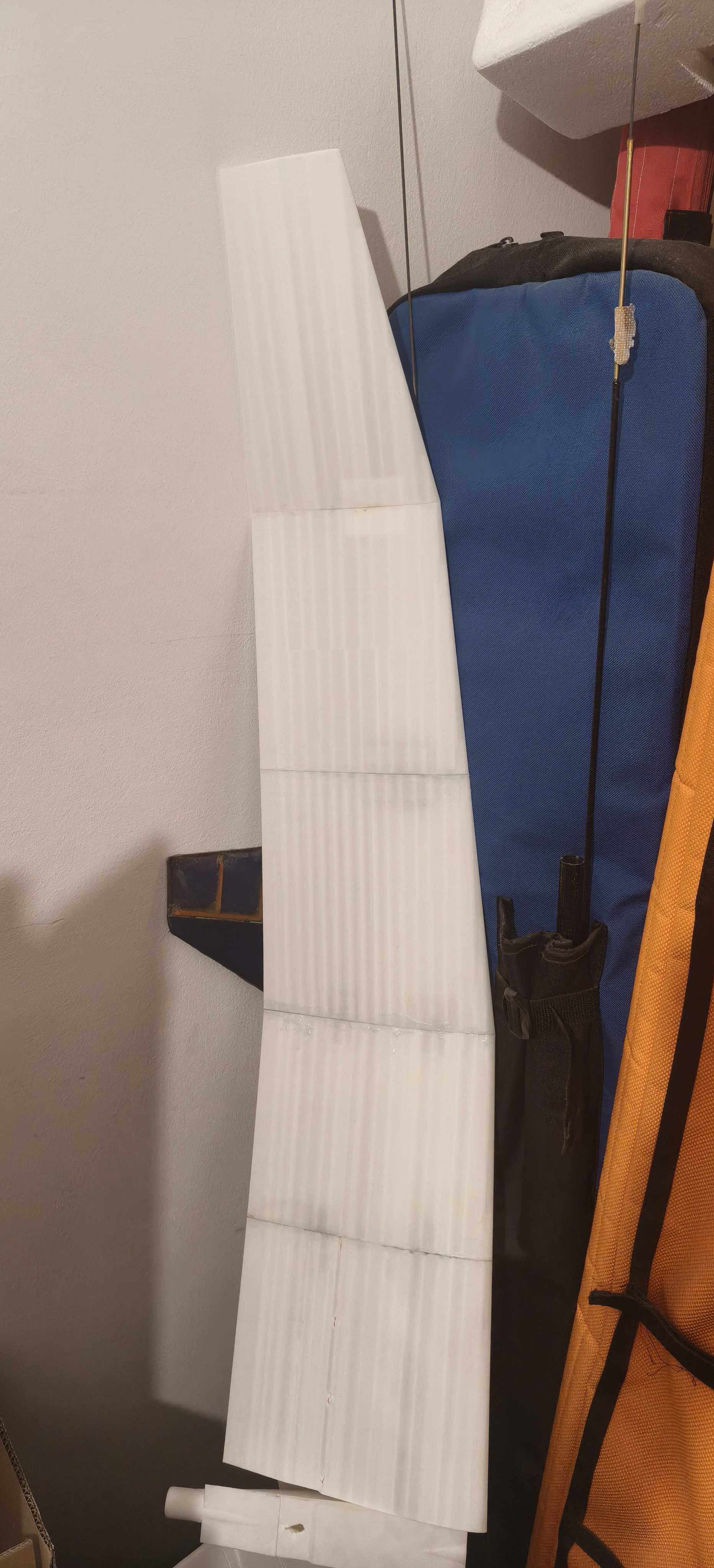
  . First wing already printed (just have to sand the glue now)
I want this to be reproducible. I will print small foaming coupons to map expansion versus temperature and speed, then lock flow settings that preserve dimensions for each filament  . The wing will be modular with printed shear webs and spar sleeves, snug joiners, and clean leading and trailing edges so the profile stays true
  . LW-PLA will cover most skins, LW-ASA will guard the surface contact between each part, and HT-LW-PLA will reinforce hot spots like the nose or motor mount
  . I will use simple jigs for incidence and washout, keep weight logs and CG checks, and run quick torsion tests so others can copy the recipe
  .
.
Flight testing starts with gentle hand launches, then slope and thermal sessions  . I will log sink rate, wing loading, and glide impressions, and I will share what actually works in the air, not only what looks pretty on the bench
  .
.
Once V2 is printed, flown, and refined, I will release everything for free: .3mf files, STLs, slicer profiles, a compact build guide with flow curves, temperature ranges. Then I will scale the method to a four-meter RC sailplane. Same idea, bigger smile  . And that’s why it’s funny. Mechanically speaking..It will be easier to print as the airfol is way bigger (just will take longer to print though) !
From gyroid to glide, let us trade cost for know-how and turn sanding marathons into repeatable prints. Bon vol  .
.