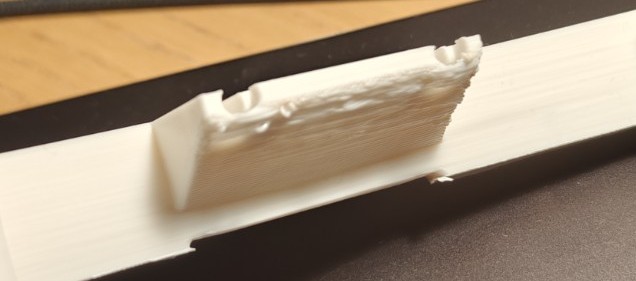
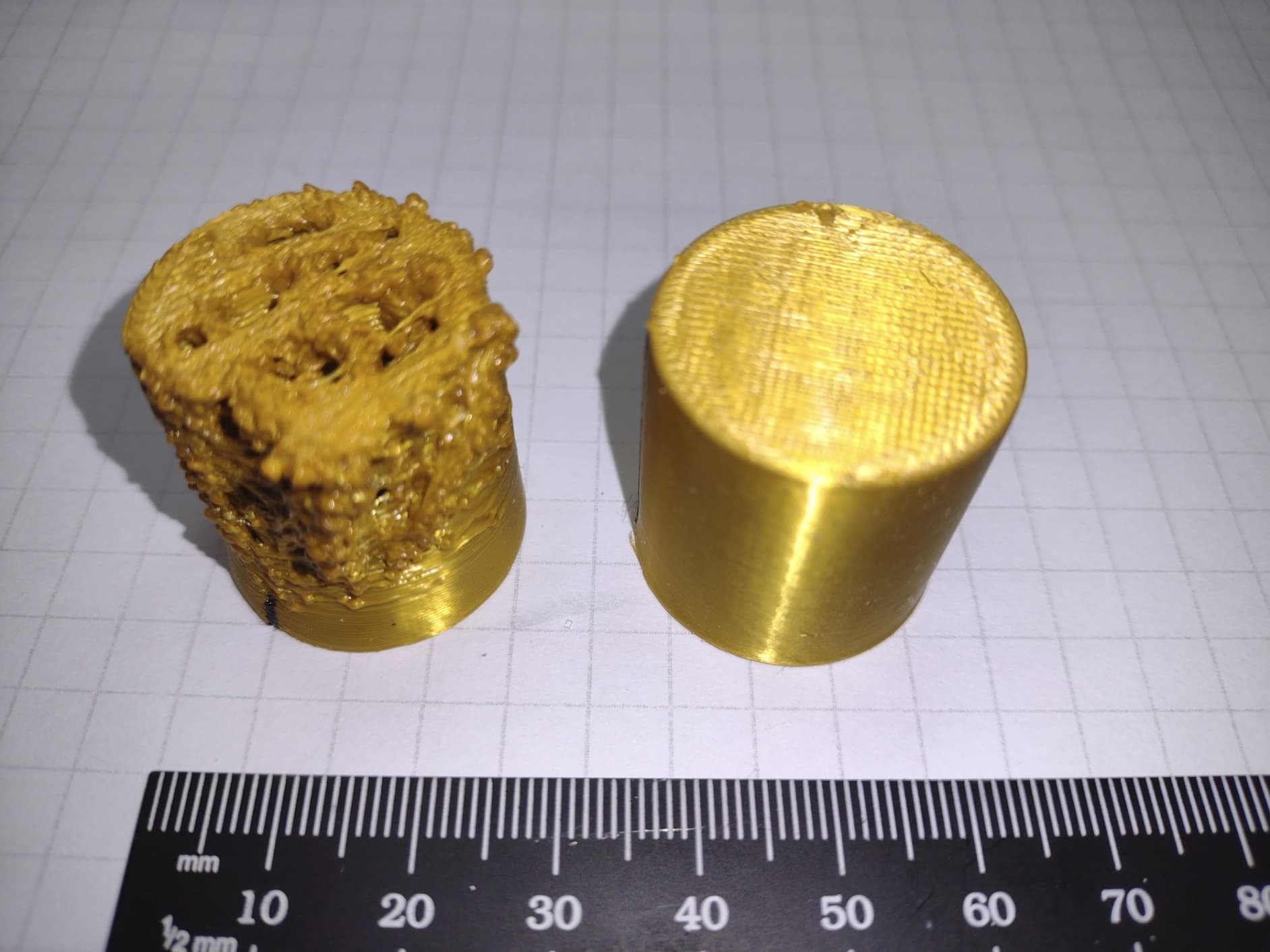
Hi all! I used to print ABS on my K2 Pro and this was working fine. Now I do the same thing and overhangs are now like in the picture. Tried both ABS filament brands I have here, both the same. I think between my old prints and now there are at least new CP version and new firmware on printer. I am little frustrated as this was working fine before  I checked the slicer profile as well, used a standard one, used standard ABS profile as well, does not really change it.
Can someone give me a hint on this? Much appreciated 
Welcome to the community. This looks like filament moisture. Did you dry the filament and try again?
Before drying it, weigh the spool first. Then dry it and weigh it again. That gives you a way to confirm whether moisture was actually removed and helps rule filament moisture in or out as a cause. Without weighing it, you are mostly guessing.
As an example, on a 1 kg spool, even a 1 g reduction is 0.1% by weight, and that can be enough to affect print quality.
Recommended ABS drying range:
Note: PLA, PETG, ABS, ASA, nylon, and other materials use different drying temperatures. If you see claims of a universal drying temperature, ignore that advice and use the filament maker’s recommendation.
Do not exceed 80°C unless the filament maker specifically recommends it and you know the spool can tolerate it. More heat is not automatically better and not all spools can withstand higher temps. Also note that cardboard retains moisture on its own so your measurements may not be absolute. If the dryer has uneven hot spots, excessive temperature can soften the filament, cause it to stick to itself, or deform a plastic spool if it is not a high temp spool - many cheaper spools are not.
Temperatures below 70°C can still dry ABS, but drying time increases significantly. Below 60°C, drying ABS becomes slow enough that it may not be useful for troubleshooting.
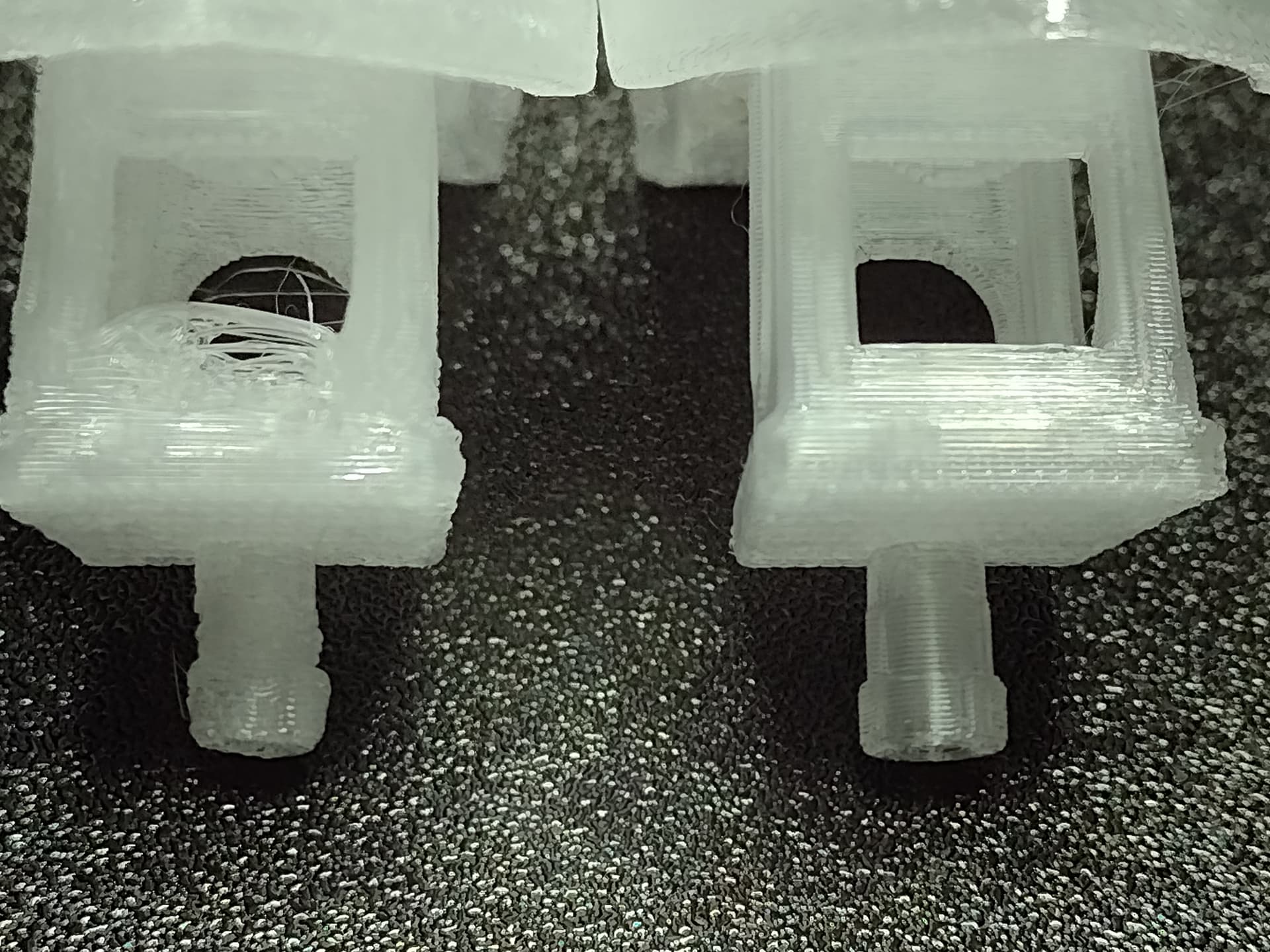
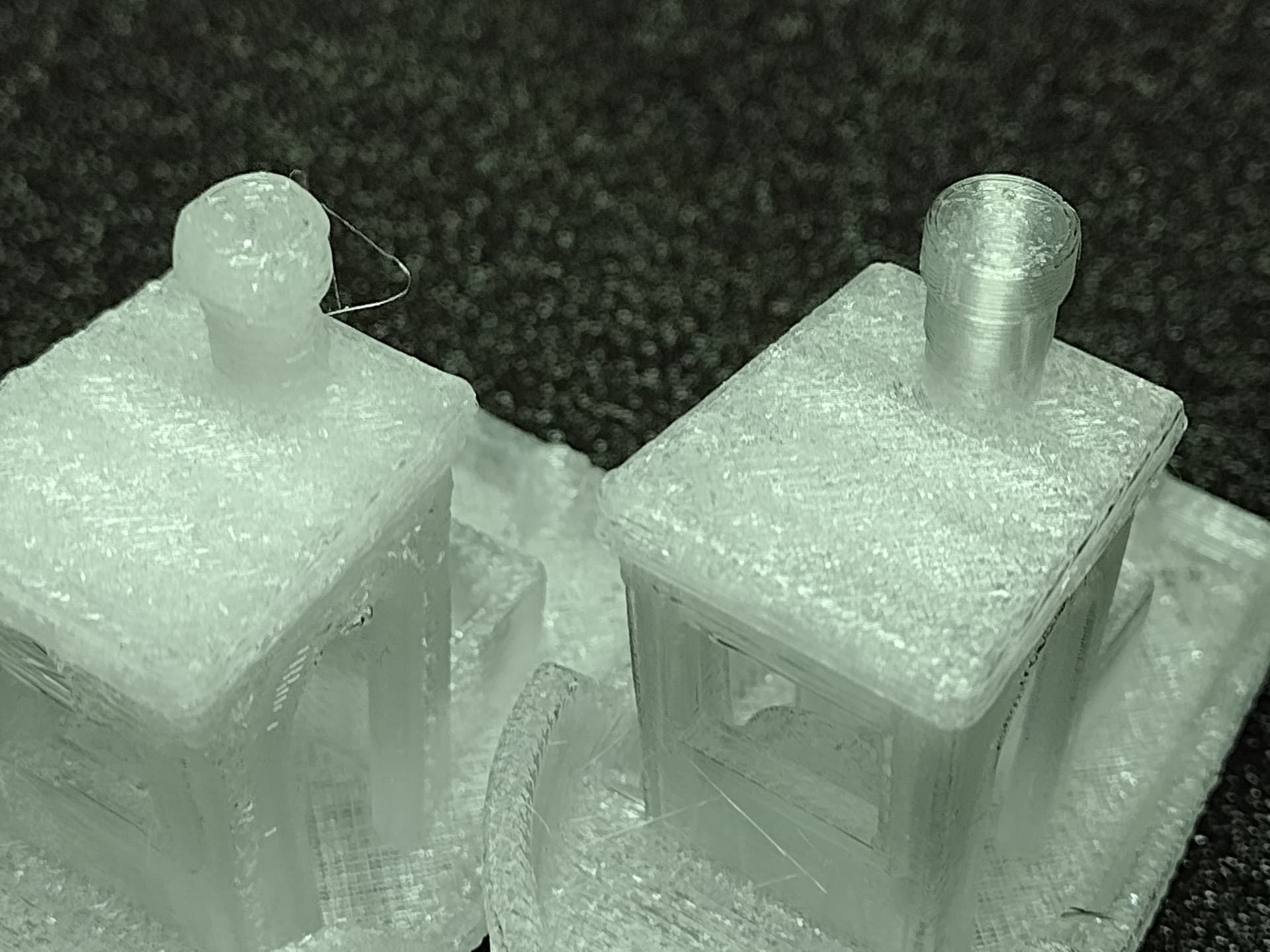
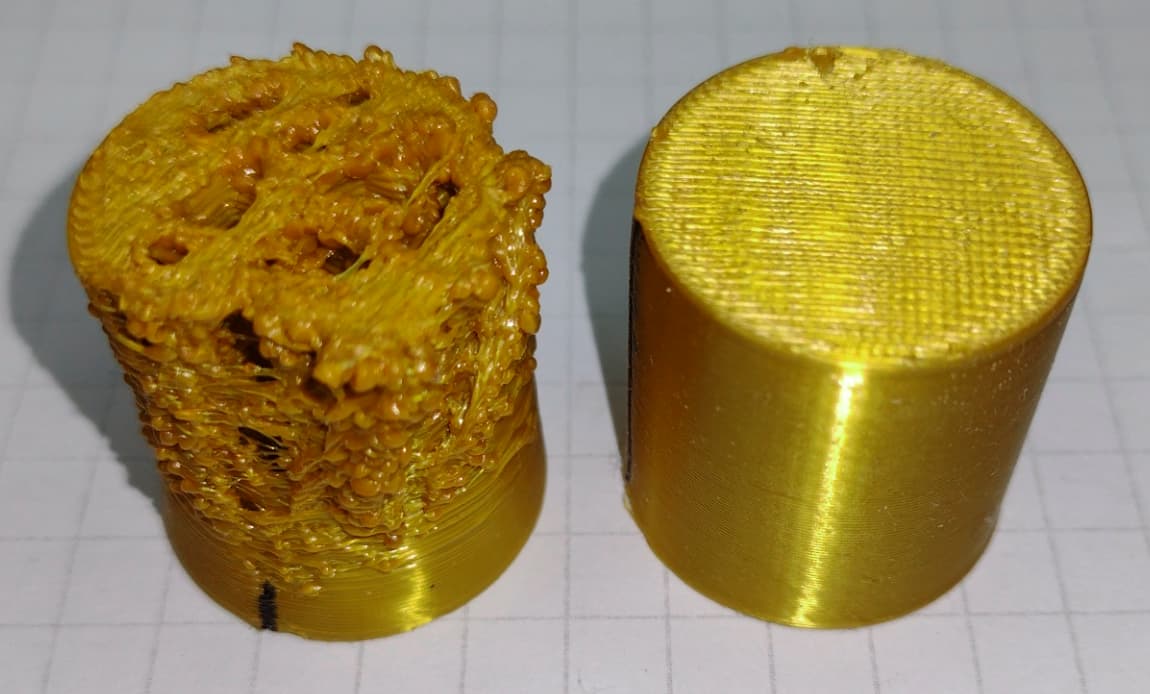
Some test examples below that I keep around to show wet vs. dry filament. The wet print is on the left. The Benchy is clear PETG, and the gold print is silk PLA. This shows that even PLA, although less moisture-sensitive than many other materials, can still be affected.